
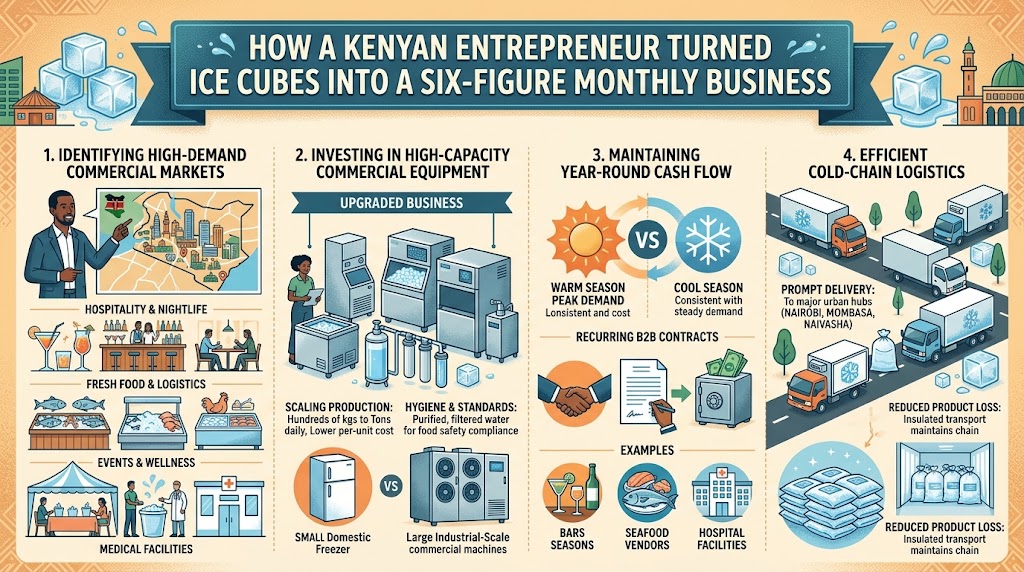
1. Identifying High-Demand Commercial Markets
Rather than relying on casual retail, successful ice suppliers tap into key B2B sectors that require high-volume, reliable cooling daily:
- Hospitality & Nightlife: Pubs, clubs, and high-end restaurants need clean, food-grade ice constantly for beverages and cocktails.
- Fresh Food & Logistics: Fishmongers, poultry vendors, and meat distributors rely on crushed or packaged ice to maintain the cold chain during transport.
- Events & Wellness: Weddings, catering companies, hospitals, and recovery wellness centers buy ice in bulk.
2. Investing in High-Capacity Commercial Equipment
While many start with domestic freezers or small units, reaching six-figure monthly revenues requires upgrading to industrial, high-output commercial ice makers:
- Scaling Production: Commercial machines produce hundreds of kilograms to several tons of ice daily, reducing per-unit production costs significantly.
- Hygiene & Standards: Using purified or filtered water ensures compliance with food safety authorities, opening doors to supply large supermarket chains and hotels.
3. Maintaining Year-Round Cash Flow
Ice demand peaks during warm seasons, but securing recurring contracts with bars, seafood vendors, and hospitals ensures consistent revenue during cooler months, preventing seasonal slumps.
4. Efficient Cold-Chain Logistics
Logistics and prompt delivery are crucial to prevent product loss before reaching clients. Entrepreneurs invest in insulated vehicles or refrigerated delivery trucks to handle bulk distribution efficiently across major urban hubs like Nairobi, Mombasa, or Naivasha.